FOCUS ON THE PROCESS NOT THE RESULT
[8-minute read]
When we don’t sense God’s immediate intervention in a time of crisis or uncertainty, we are quick to become distressed even though God’s faithfulness does not change according to our situations. However, our perception of Him tends to change according to the realities we are experiencing.
The Bible tells us that Martha and Mary were hometown friends of Jesus who was a familiar name in their household. Even their only brother grew close to Him. As friends, they kept each other informed about their lives even though Jesus was often away. Then, Scripture tells us that “the sisters sent word to Jesus, “Lord, the one you love is sick… Now Jesus loved Martha and her sister and Lazarus.” (John 11:3, 5). It was an urgent message; not one that could wait days for a response. We also know that the sisters were not alone for “many Jews had come to Martha and Mary to comfort them in the loss of their brother.” But Jesus did not come early enough for what they were expecting of Him.
This was when things got tricky: the sisters were not expecting Jesus to come and offer comfort like the other mourners around them. Historical estimates reveal that foot travel from Jerusalem - where Jesus and His disciples received news that Lazarus was dying - to Bethany would take only about 60 minutes. The human thinking was that if Jesus had arrived before Lazarus succumbed to his illness, things would have been different. It would have showed that Jesus cared about his friend. But instead, the Lord delayed His trip for another 2 days. Knowing that the Lord was nearby yet not show up before their brother’s demise was hurtful to Martha and Mary. They felt deeply let down and were secure enough in their friendship to let Him know exactly how they felt.
“Martha said to Jesus, “’if you had been here, my brother would not have died.’” (John 11:21). And Mary, too, echoed, “’Lord, if you had been here, my brother would not have died.’” (John 11:32).
The biblical record of their honest conversation with Jesus serves to teach us a few things about our perspective of God during difficult times. Martha and Mary had assumed that Jesus could only change outcomes before they happened; not after the fact. But Jesus planned to break that assumption because He was not bound by the sequence of events. In fact, when the Lord was informed about Lazarus’ condition, He said, “This illness will not end in death. No, it is for God’s glory so that God’s Son may be glorified through it.’ (John 11:4). And in case anyone thinks Jesus was heartless, it was recorded that Jesus wept after seeing the 2 sisters and the visiting Jews who were there with them (John 11:35).
When we are fixated on how things should happen, we limit our vision of good outcomes to the confines of our imagination and life experience. ‘If only’ speculations begin to dominate our thinking. We think that God is good only if He intervenes according to our methods and our idea of timeliness. We want results after a time of prayer and fasting! We think that the result of God’s intervention is all that matters, and often, our testimonies downplay what God reveals to us in the process – including wrong thinking, unhealthy choices, and hidden sins. On the other hand, those who have a progressive mindset harvest the rich lessons and deep changes that happen before the final outcome. They are not obsessive about comparing their realities with the results they want.
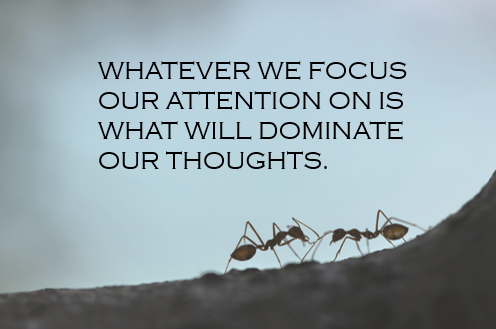
In case there is any doubt about it, the Christian life with God is largely about the journey with Him rather than quick answers from Him. But human nature prefers arriving at destinations on shorter journeys. We want to skip the contemplation and downplay the emotional details that could deepen our relationship with God.
GUIDE MY STEPS
How would you cross the road safely on an especially hectic day of the week, and the road traffic is heavy, motorists are impatiently honking, and there is a heavy downpour to boot? Well, you would cross the road in exactly the same manner as when the weather is clear, traffic is smooth and you are enjoying a day off. You should be able to cross the road safely anytime as long as you comply with the traffic regulations.
In the same way, when we let our anxieties and external pressures alter how we respond to realities instead of staying focused on the step-by-step journey with God, we will constantly be swept up by the demands of life and their impact on us. In today’s fast-paced life, staying in step with God will always keep us safe on course with Him. To be safe is not the same as playing it safe by avoidance of action out of fear of failure or rejection.
Therefore, it is so important to ask God to guide our steps always. “Guide my steps by your word, so I will not be overcome by evil” (Psalm 119:133 NLT). Psalm 119:105 pictures the Word of God as a guiding light for our paths to ensure that we move towards His outcomes without being pulled in different directions by our anxieties. “Your word is a lamp for my feet, a light on my path”. ‘Lamp’ here refers to an illumination that provides safety for the few steps ahead rather than a flood light that illuminates a large surface area! In fact, seeing too much too soon may derail us!
Therefore, it is imperative that we learn to focus on God - one step at a time because “He delights in every detail of (our) lives. Though they stumble, they will never fall, for the Lord holds them by the hand.” (Psalm 37:23-24 NLT paraphrased). Details of our progress are found in the process, not the result.
GIRD MY MIND
CS Lewis (1939) famously wrote this analogy: when a junior devil asked Satan about the plan, Satan replied: “Our plan is very simple! We will make the noise of man's world so loud that he can no longer hear the voice of his God”. More than ever, this noise continues to escalate today. We live in a culture of over-stimulation where
a constant consumption of information has replaced thinking and reflection. We become reactive instead of reflective. It shows in our behavior and response to life.
To counter the current threats to the quality of our contemplation, the Bible offers a timeless prescription for mental hygiene: “Finally, brothers and sisters, whatever is true, whatever is noble, whatever is right, whatever is pure, whatever is lovely, whatever is admirable – if anything is excellent or praiseworthy – think about such things.” (Philippians 4:8).
Instead of filling our minds with more digital content and allowing them to dominate the formation of our thinking, believers are advised to “demolish arguments and every pretension that sets itself up against the knowledge of God, and we take captive every thought to make it obedient to Christ.” (2 Corinthians 10:5).
In this way, we can prepare our minds for the right action by learning to recognise our reactive tendencies that are more present-centred than future-focused (1 Peter 1:13 NLT). Indeed, the mind is a very private part of us that is politely left out of conversations. But a true friend and a caring ministry is one that will help us pay attention to the quality of our self-talk and mental habits that affect our experience of life as followers of Jesus.
GUARD MY HEART
Not only is the physical heart the most vital organ in our body, it is also the seedbed of our emotions, decisions and motivations. Scripture reminds us that “Above all else, guard your heart, for everything you do flows from it.” (Proverbs 4:23).
In addition to being the centre of our physical and emotional well-being, the heart also reveals our spiritual health through the actions and expressions that come out of it. When we deflect emotional expressions that foster deeper connections, it shows a discomfort with vulnerability. When we overplay self-reliance and downplay our need for meaningful friendships, it can signal a difficulty in trusting others and a struggle with low self-esteem.
Proverbs 4:21-22 advises us to nurture our hearts with the Word of God. “Do not let them out of your sight, keep them within your heart; for they are life to those who find them and health to one’s whole body.“
Beyond it being our personal responsibility to maintain a healthy spiritual heart, we also have the relational duty to help each other process hurts, go through seasons of despair, bring clarity in seasons of change, restore hope in times of painful loss, and being present without being invited. Too often, we would rather tell each other to focus on God alone than check in on how they are progressing and coping in life. Being outcome-oriented (just like scoring a performance), we tend to focus less on how we could deepen our knowledge of God and of His love for us in the process.
As believers, we have a shared goal in life: to fulfill God’s unique purpose in our individual lives, “being confident of this, that He who began a good work in (us) will carry it on to completion until the day of Christ Jesus.” (Philippians 1:6, paraphrased).
The apostle Paul famously lived with one conviction: “… my life is worth nothing to me unless I use it for finishing the work assigned me by the Lord Jesus – the work of telling others the Good News about the wonderful grace of God.” (Acts 20:24 NLT).
Find the conviction that will take you on a better life journey right now. Avoid meaningless clichés like ‘living for God’, or ‘doing the best I can’. Ask God for the ability to see what you really need that is attuned to the process of what you are going through now, and for the vocabulary to articulate it convincingly so that you will arrive safely on the other side of your realities.
This is a summary and reflection based on a virtual BIR Session held on 28 March 2026.