THE JABBOK EXPERIENCE
[9-minute read]
If your younger self met you today, what would you say to the person you have become? Would the earlier version of yourself even know it’s you?
Jacob had to face that question when he returned to the place where his life unraveled. Looking back, he said, “I had only my staff when I crossed this Jordan, but now I have become two camps.” (Genesis 32:10). He had left Beersheba as a single man with a sense of destiny, and now, returning with a sizeable household with servants and livestock in tow, he faced the prospect of reuniting with his estranged twin brother, Esau, with ‘great fear’. His homecoming was marred by an important historical detail: he had earlier cheated his brother of his birthright, and deceived his ageing father into giving him the blessing intended for Esau.
Yet, he knew this was an unavoidable event for God had said to him, “Go back to the land of your fathers and to your relatives, and I will be with you.” (Genesis 31:3). He also knew that this homebound journey was determined from the time he left home decades ago. For God had sent him out with the assurance “I am with you and will watch over you wherever you go, and I will bring you back to this land. I will not leave you until I have done what I have promised you.” (Genesis 28:15).
Genesis 32:22-28 highlights Jacob’s encounter with God at the Jabbok River on his homebound journey.
It provides us with three important life-building lessons:
1. BE ALONE WITH GOD
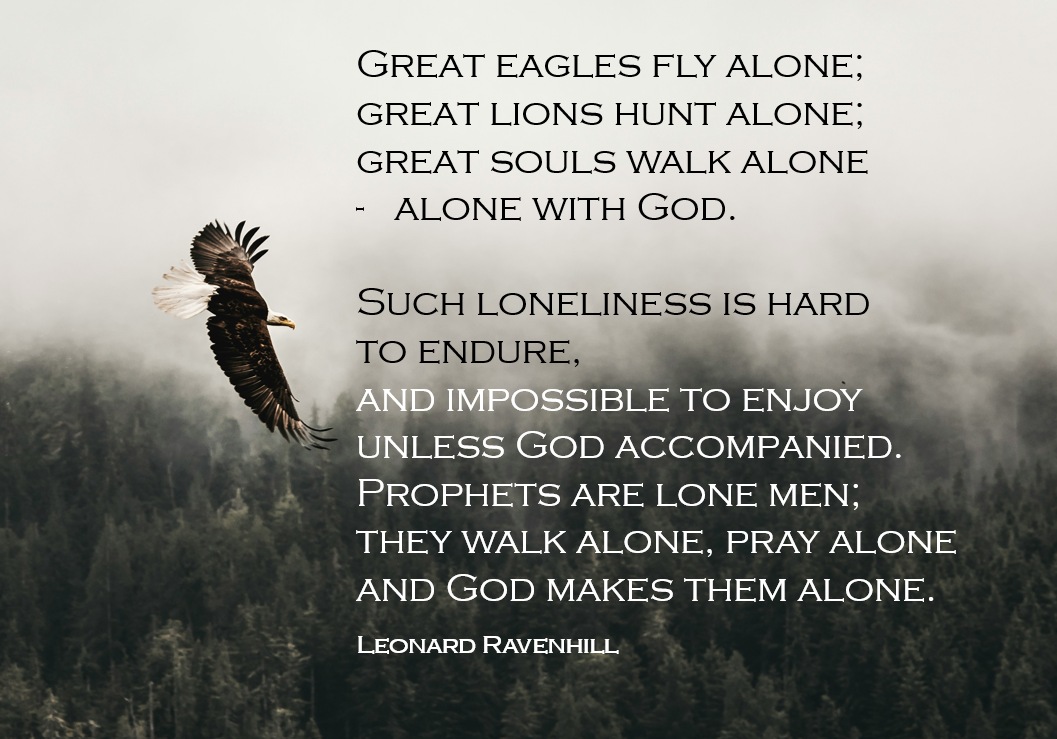
As Jacob approached his hometown, he knew that he needed to have a moment alone with God, no matter what. While he might feel safer surrounded by his tribe, only in solitude would he find God. So he sent his entire entourage ahead of him, and stayed behind – alone.
Jacob likely recalled an earlier point in his life when he had similarly stopped for the night in a “certain place”. There, “he had a dream in which he saw a stairway resting on the earth, with its top reaching to heaven, and the angels of God were ascending and descending on it”. (Genesis 28:10-12).
This time, as soon as “Jacob was left alone, … a man wrestled with him till daybreak.” (Genesis 32:24). This verse captured an interesting change of role: Jacob, who was always competitive since fetal life when he grabbed Esau’s heel, and always ready to outmaneuver others (his brother, his father and his father-in-law) to gain an advantage, now played defense in a match he did not start. True to form, Jacob engaged in full force! Eventually, “when the man saw that he could not overpower him, he touched the socket of Jacob’s hip so that his hip was wrenched as he wrestled with the man.” Some would say that God disabled Jacob’s strength to stop him.
We live in a time when loneliness is seldom brought up in conversations, rarely acknowledged and often downplayed in Christian circles. There are many lonely people in a crowd, and in any community. It is a symptom of lacking the love and support of another like-minded human.
Moses was a lonely leader who often faced complaints from the people he led out of Egypt. There was no one relatable who had done what he did, whom he could turn to for encouragement.
Elijah ‘was afraid and ran for his life’ for over forty days and nights to a cave by himself. Unknown to him, he was at the threshold of God’s call to set kings and his successor in place but instead, he felt intimidated and abandoned by God. (1 Kings 19:1-18).
David spent several years running from King Saul who was jealously pursuing him to kill him. He, too, experienced intense loneliness even when about 400 men “who were in distress or in debt or discontented gathered around him”. People thought killing King Saul was the solution but he knew God had another plan that did not involve taking out Saul. (1 Samuel 22:1-2).
Seasons of loneliness are not signs of God’s absence but important seasons of growth if we do not run away from them, or numb feelings of loneliness with work and activities. We also don’t do ourselves any good by ignoring God in our loneliness. God can see that we are alone when we lack deeper connections with others. We cannot fake it! He can feel the loneliness we try to drown with Netflix binges, and addictive TikTok scrolls. He can hear the loneliness in our spirit when we make small talks with people, and in the things we do not bring up in prayer to Him.
Instead of ignoring your loneliness, ask God why you feel a crushing loneliness while sitting in church, what is this unshakeable loneliness in spite of things going well, and what are the unaddressed habits that heighten your loneliness.
“When I am overwhelmed, you alone know the way I should turn. Wherever I go, my enemies have set traps for me. I look for someone to come and help me, but no one gives me a passing thought! No one will help me; no one cares a bit what happens to me.” (Psalm 142:3-4 NLT).
God will certainly respond to you. Don’t turn to chatbots like Chatgpt for comfort or answers! It is, after all, artificial intelligence trained to respond like humans using already available datasets. Instead, what we have access to is “… wisdom that comes from heaven is first of all pure; then peace-loving, considerate, submissive, full of mercy and good fruit, impartial and sincere.” (James 3:17).
We can only find strength and endurance when we are alone - with God in the picture. It is when Psalm 46:10a becomes real, “Be still, and know that I am God.’
2. HOLD ON TO GOD; DON’T WRESTLE
God initiated a wrestling match with Jacob because he was already in a combative mode, distressed by the dreadful prospect of meeting his estranged twin brother whom he cheated. Perhaps that was the only way for God to effectively engage him.
But a healthier way to engage God is to not expend energy to wrestle with Him.
The Bible also mentioned other people who held onto God without wrestling with Him like Joseph, Hannah and the apostle Paul. No one felt more alone than Joseph who was removed from the protection of his father and left to grow up quickly as a slave far from home. He had no life coach or mentor to guide him. As a childless woman, Hannah faced endless taunting by the other wife, Peninnah, and no defense from her husband. The apostle Paul outlived different hardships and trials because he would not let anyone or anything sabotage his divine calling. Instead of fighting against realities, he devoted his attention to putting up a good fight to finish the race God had laid out for him. (2 Timothy 4:7).
Each one held onto God in very lonely and painful seasons of their lives, and their biographies are held up today to teach all believers about trusting God when the outcomes were unknown and they just had to proactively take the next steps - by faith in God.
Are you fighting your realities and wrestling with God because you are not sure if He cares, if He knows what you are going through, and why He has not answered your prayers yet.
Whenever you find yourself wondering if God is doing a good job at being God, know this: “For I know the plans I have for you,’ declares the Lord, ‘plans to prosper you and not to harm you, plans to give you hope and a future.” (Jermiah 29:11). Hold onto Him when the limitations of human thinking makes it difficult for you to see any good in what you are going through. Let yourself fall only on the Rock of your salvation.
Declare: I will fight the good fight, I will run the race marked out for me, and I will keep the faith as I hold on to God!
3. RECEIVE DESTINY FROM GOD
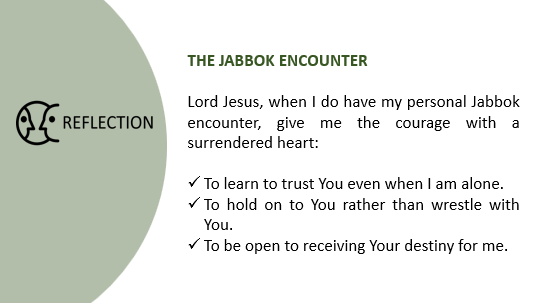
Jabbok means to drain or empty itself. The Jabbok Encounter is one where we learn to empty out our over-reliance on self and our distrust of others. We may need to dismount the savior's mentality that we are always a service to others, and not the other way round. We may need to drain out over-confidence in our abilities, and an over-emphasis on our ambitions and motives. The Jabbok Encounter is not a place to obtain God’s stamp of approval on what we already have in mind to do, but to ask God to reveal His plans in our realities.
We stay in Jabbok with God when we call out to Him, seek His face, hold onto what He has for us in expectation of receiving His direction for our lives. It is a game-changer that never fails to transform us and our future – individually (this is what we call destiny). No one can be in Jabbok for us.
God never makes wrong moves, if we truly let Him take the lead. He will never lead us into wrong relationships that contradict His teachings. He may prompt us to move away from some people we had previously relied on for approval, direction and comfort, and move us towards others who have a track record of hearing God correctly in strategic life-impacting decisions, and responding to Him decisively.
The Jabbok Encounter is the place to ask good quality and hard questions that go beyond the ordinary. It is not a place to make small talk with God. Jacob had no time to lose, having sent his entire household and livestock ahead to what could be a hostile welcome from Esau! The stakes were too high when he put them at risk like that!
Overnight, God quickly gave him a name change. Jacob was tired of being Jacob the wrestler, the contender, the conniver. “Your name will no longer be Jacob, but Israel, because you have struggled with God and with humans and have overcome.” (Genesis 32:28). It was not just a name change but a change in destiny. Grabbing things would no longer feel natural to him. From staying behind the returning group, he went to the front and greeted his estranged brother “and bowed down to the ground seven times as he approached his brother. But Esau ran to meet Jacob and embraced him; he threw his arms around his neck and kissed him. And they wept.” Instead of rivalry, there was reconciliation (Genesis 33:3).
God does not give name change simply for cultural reasons. He initiates name changes to change destinies. When Jesus told Simon Peter that he would be Peter – a rock that the enemy could not destroy – it meant restoration from the grave missteps that he would make later in denying Jesus. (Matthew 16:18-19).
While most people will not have a name-changing experience with God, we can expect Him to change outdated assumptions and wrong narratives we identify with that limit our ability to make progress with Him.
It's never too late to find your destiny through the Jabbok Encounter that your younger version will be proud of!
This is a summary and reflection based on a virtual BIR Session held on 21 March 2026.